RSS

 
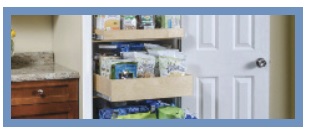
A pantry is the ideal nook for storing extra food and other items ordinarily crammed into the kitchen. It’s also a nice design feature, as it harkens back to the days of country kitchens with spacious pantries.
 
You might be thinking, “That’s nice, but our home doesn’t have a pantry.”
 
That’s okay. These days, there are many ways to create a pantry in your home – even if it doesn’t have one! Here are just a few suggestions:
 
• Add shelves to the laundry room. If you have the space, this is the
ideal place to create a mini-pantry.
 
• Purchase a portable pantry. There are many available on the market. Some are even disguised as cabinets you’d expect to see in living and dining rooms.
 
• Purchase a movable pantry. These units are on wheels and can slide in and out of the kitchen with ease. Some are short enough to slide conveniently under a kitchen table.
 
• Make use of an unused closet. These are rare in most homes, but if you have a closet that isn’t being used, it can easily be converted into a pantry.
 
As you can see, there are plenty of options available. You don’t necessarily need to build an extra room!

 
 
Read

You can’t call yourself a dentist unless you have specific hard-earned credentials. Just about anyone, however, can hang a shingle and call himself a home improvement contractor. That’s why choosing a reputable one is so difficult. Here are some tips:



• Find out if he or she is truly in business full-time. A part-time or occasional contractor may not have the experience necessary to do a great job.
• Ask about licenses and other credentials. Some contractors have accreditations from professional and trade associations.
• Review his or her project portfolio. A reputable contractor will have photos and other evidence of work completed for similar clients.
• Check online for reviews. If there are more than five poor reviews within the past three years — that’s a red flag.

• Ask for references. Then, call at least one.


Finally, the best contractors are those that get recommended by people you trust.


Looking for a contractor recommendation? Call me today and I would be happy to provide you with a list of tried and true professionals.

Read


Comedian George Carlin’s most memorable routine was, “A place for my stuff.” In it, he talked about dealing with the increasing quantity of items we accumulate throughout life.


George was funny. The problem is not.


Here are some low-cost ideas for quickly creating storage space for your stuff.


• Attach a cloth pouch or thin plastic basket to the inside of cupboard doors. This is a great way to store Tupperware lids, cosmetics, etc.
• Install hooks inside the foyer closet for loose items such as hats and scarfs.
• Use egg cartons to make effective storage inserts in drawers.
• Fashion stores often put purchases in stiff, high-quality boxes. Placed on their sides, these make effective storage compartments. (Especially shoeboxes.)
• Consider using suitcases for out-of-season clothing. In addition to storage, they also provide protection.
• Never throw out an old wine rack. There are numerous ways these can be used for storage. (Example: for tools.)


By thinking creatively, you can probably come up with many other simple ideas for creating more storage. The reward is a home that looks neater and more spacious.

Read

There are few things more beautiful than cut flowers in a vase. They instantly brighten any room. That is, of course, until they wilt and die. So how do you make cut flowers last as long as possible? Here are some ideas:


• Cut the bottom of the stems before you put the flowers in the vase. An angled cut is best as this will enable the flower to draw in more water.


• Add a fertilizer to the water. Most flower shops include a pouch with the order. Follow the directions carefully. Don’t use too much.


• Make sure the vase is high enough to support the flowers. Too much strain on the stems will cause the flowers to die sooner.


• After a couple of days, re-snip the stems. This will add an additional day or two to the life of the flowers.


• Flowers last longer if you put them in the fridge (in water) overnight. That’s why florists store cut flowers in cool rooms.


Finally, watch the water level and top off as required. Older cut flowers will die quickly when starved of water — even for just a couple of hours.

Read

Many homeowners think there’s not much they can do about telephone, heating, water and other utility expenses. Sure, you may grumble about a high heating bill one month, but what can you do about it? Turns out, you can do plenty. There are several ways to reduce monthly utility costs that can save you tens or even hundreds of dollars. For
example:


• Shop around for a better phone plan. Then contact your phone company. They might match the rates.


• Turn down the thermostat on your water heater. You likely don’t need tap water to be that hot.


• Clean the screen on your outside air conditioning unit regularly. (Gently with the water hose.) Dirt and leaves can build up on it, reducing the unit’s efficiency.


• Leverage the sun. Open curtains in the winter to gain heat. Block direct sunlight in summer to keep the cool air inside.


• Scrutinize your bill. There may be extras you’re paying for that you don’t need.


• Play with the thermostat. Experiment with setting the temperature a couple of degrees lower. You might not notice any difference.


It’s worth paying attention to your utility costs. Just a few smart moves can save you some serious money.

Read

You may love animals, but with the exception of your family pets, you don’t want them in your home. Here are some tips for keeping the wildlife around your property where it belongs: outside.


• Don’t place bird feeders too close to your windows. Doing so may cause birds to associate a window with food and therefore try to peck their way inside.


• Make sure window screens are secure. If you can push a screen loose with your hand, so can a bird or other animal.


• Check screens on dryer vents and chimneys. If they are damaged, fix or replace them.


• To determine how animals are entering your home, stuff wadded paper in the suspected entry point. If the paper is disturbed the next day, you’ll know where they got in.


• Never leave food outside, unattended. After a barbeque, for example, take all remaining food inside. If you do find an animal in your home, never try to pick it up. It may bite or have rabies. Instead, call a professional.

Read

You’ve no doubt noticed the occasional news report about a product being recalled for safety reasons. For example, a car model with a brake problem, or a children’s toy that, under some circumstances, may cause injury. You may not know that these news reports are merely the tip of the iceberg. For each product recall you hear about in the media, there are dozens that get little, if any, publicity.


That means there may be products in your home that have been recalled — and you don’t even know about it. It’s a scary thought. How do you find out about recalled products that may affect you? Here are two tips.


1. Always complete the registration that comes with many products. This is typically done by mailing in a registration card or filling out an online form. When you register, you’ll be alerted by the manufacturer if the product is recalled for any reason.


2. Both Canada and the United States have agencies that list recalled products on their websites. In Canada it’s the Healthy Canadians website at www.healthycanadians.gc.ca. In the United States it’s the Consumer Product Safety Commission at www.CPSP.gov. It’s a good habit to check these sites every season.


If you discover that a product in your home has been recalled, contact the manufacturer immediately. Never assume that the reason for the recall won’t apply to you.

Read


There are many reasons why the air quality in your home may not be at its best. A faulty furnace or an aged carpet are just two potential culprits. Until you get those issues addressed, how do you make your indoor air healthier — today?


Here are some ideas:


  1. Check the furnace filter. This is one of the most overlooked maintenance items in the home. Any furnace repair person can tell you stories about filters they’ve seen caked in dust. Make sure those aren’t yours. Air passes through those filters before circulating throughout your home. Replacing a filter takes less than five minutes.
  2. Clean the drains. Drains are a surprisingly common source of odour in the home. Most people only clean them when they’re clogged, but they should be flushed thoroughly with a good-quality cleaner at least once a season.
  3.  Turn on the bathroom fan. Not only do bathroom fans remove odour, they also reduce moisture build-up. About 50% of air pollutants originate from some type of moisture; mould being the worst. Professionals recommend you keep the bathroom fan on for at least 30 minutes after a shower.
  4.  Clean your doormat. Even if your doormat doesn’t smell, it can be a source of air pollutants. When people wipe their shoes, they transfer pesticides and other outside ground pollutants from their shoes to your mat.


Of course, you can always open a window. That’s the most popular way to freshen the air, and it works.


Read

If you own a car, you know there’s more to the cost-of-ownership than just finance payments and gas. You also need to budget for maintenance and repairs. If your car is older, those costs are going to be higher. That’s just common sense.


The same is true of your home. It’s wise to budget for anticipated repairs and maintenance. Otherwise, you might be caught by surprise when you find that your furnace stops working and needs to be replaced. That can easily be a four-figure expense.


Experts recommend that you set aside 1% of the value of your home for repairs and maintenance. For a $500,000 property, for example, that would be $5,000. That is, of course, merely a rule of thumb. If your home is older, you may need to budget more.


Another recommended method is to budget $1 a square foot. If you have a 2,500 square foot home, that would be a budget of $2,500. Again, that number would need to be higher for older properties.


When budgeting, consider things that are getting old and will likely need to be replaced within the next three years. Examples include roof shingles, furnace, A/C unit, deck, fence, plumbing, and windows. Depending on the size and model, a new A/C unit will cost at least $5,000. Anticipating that expense will help you plan accordingly and avoid the shock of an unpleasant and costly surprise.


Keep in mind that budgeting $2,000 for repairs and maintenance doesn’t mean you’ll actually spend that money this year. But, if needed, the budget will be there, and that’s peace-of-mind.


Read

Do you have a renovation project in mind – and wonder how much value it will add to your home? Remodeling Magazine recently did a study of renovation projects, comparing costs to added value. Here are some of the results:


Replacing a main entry door has a return on investment of over 95%. After all, the entrance to a home is one of the first things a prospective buyer notices.


Adding a new deck also adds a lot of value. Depending on the materials used, you can expect to get back three-quarters of the money invested.


Another high-payback project is the garage door. This once again demonstrates the importance of a home’s “curb appeal.”


If you’re tackling a big project, such as a basement renovation, you’ll be glad to know that, according to the study, a project like this adds a lot of value.


Finally, minor improvements to bathrooms and kitchens – such as adding new countertops or cupboards, can also be good investments that mostly pay back when you sell your home.


Of course, these figures are averages and can vary widely depending on location, type of property, and other factors.


Need help determining how a particular home improvement might impact the selling price? Call today.

Read

There are many hidden sources of moisture in your home that can lead to serious problems, such as mould.


To keep moisture levels in check, consider these tips:


• Bathrooms are an obvious source of moisture build-up. Contractor and TV personality Mike Holmes recommends keeping the fan going for at least a half hour after a shower.


• Check regularly for water infiltration around window and door sills, as well as other intakes into the home, such as dryer vents and cablewiring.


• Determine the humidity level in your home. According to the Environmental Protection Agency, it should be 30-60%. (Keep in mind that humidity may vary greatly from room to room.)


• Regularly inspect caulking around sinks, tubs and showers. Even a tiny break can cause water to leak gradually into the wall or floor, causing damage you may not notice for months.


• Clean up wet spills as soon as possible. On hardwood floors especially, water can seep through and become trapped.


• Repair leaking faucets, toilets and pipes immediately. A drip can quickly become a shower. Being mindful of moisture today can help you avoid potentially high repair bills later on.


Being mindful of moisture today can help you avoid potentially high repair bills later on.

Read
MLS® property information is provided under copyright© by the Vancouver Island Real Estate Board and Victoria Real Estate Board. The information is from sources deemed reliable, but should not be relied upon without independent verification.