RSS


There are many reasons why the air quality in your home may not be at its best. A faulty furnace or an aged carpet are just two potential culprits. Until you get those issues addressed, how do you make your indoor air healthier — today?


Here are some ideas:


  1. Check the furnace filter. This is one of the most overlooked maintenance items in the home. Any furnace repair person can tell you stories about filters they’ve seen caked in dust. Make sure those aren’t yours. Air passes through those filters before circulating throughout your home. Replacing a filter takes less than five minutes.
  2. Clean the drains. Drains are a surprisingly common source of odour in the home. Most people only clean them when they’re clogged, but they should be flushed thoroughly with a good-quality cleaner at least once a season.
  3.  Turn on the bathroom fan. Not only do bathroom fans remove odour, they also reduce moisture build-up. About 50% of air pollutants originate from some type of moisture; mould being the worst. Professionals recommend you keep the bathroom fan on for at least 30 minutes after a shower.
  4.  Clean your doormat. Even if your doormat doesn’t smell, it can be a source of air pollutants. When people wipe their shoes, they transfer pesticides and other outside ground pollutants from their shoes to your mat.


Of course, you can always open a window. That’s the most popular way to freshen the air, and it works.
 

Read

Say you’re viewing a home and are impressed with how it looks. The walls are freshly painted. Everything seems bright and new. You’re considering making an offer.


Then, while standing on a mat in the kitchen, you hear a squeak below your feet. You lift the mat and see that some tiles are broken. Obviously the mat was there to, literally, cover up that defect.


A few broken tiles are not a big deal. But now you’re thinking, “What else might be wrong with this house?”


There’s no reason to worry that every home will have maintenance issues hidden from view. However, it’s smart to do your due diligence to ensure the home you’re considering is truly as good as it looks.


One way is to have a professional home inspector check out the property as a condition of your purchase offer. He or she will inspect the home from top to bottom, inside and out, and point out any issues you should address.


It’s also smart to ask questions. Find out the age of certain features, such as the roof, furnace, and appliances. Ask about any recent renovations, and determine whether they were done by a professional or by the homeowner.


Most importantly, work with a good REALTOR® who can provide you with information on the property that you would have difficulty getting on your own. Your REALTOR® has a stake in making sure you buy a home with your eyes wide open — knowing all the potential maintenance issues you’re likely to encounter.

Read


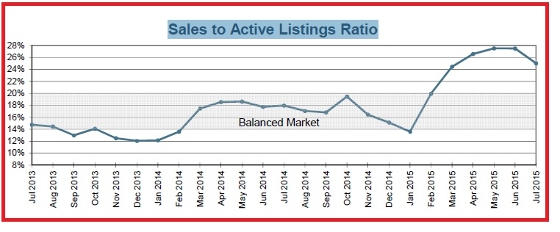
August 4, 2015, Victoria BC – The Victoria Real Estate Board today released its report on Multiple Listing Service® real estate activity in the Victoria area for July 2015. A total of 796 properties sold in the Victoria Real Estate Board region this July, compared to the 681 properties sold in the same month last year.


“We’ve certainly seen the busy spring market continue into the summer months,” Victoria Real Estate Board President Guy Crozier says. “The theme of declining listings and increased sales volume is consistent through July, and we're seeing the market go through its typical summer cycle. Sales dropped a little from the spring as we would expect, but are still up a very healthy 16.9% over last year.”


The Multiple Listing Service® Home Price Index benchmark value for a single family home in the Victoria Core this time last year was $564,300. The benchmark value for the same home this month has increased by 6.3% to $599,800.


There were 3,942 active listings for sale on the Multiple Listing Service® at the end of July, 13.7% fewer than the 4,570 active listings in July 2014.


“Consumer confidence remains very strong and shows no sign of falling off in the coming months. Interest rates continue to be very favourable; many buyers are taking advantage and making a move,” adds President Crozier. “If you are thinking about buying or selling a home, connect with your local REALTOR® for detailed information on the Victoria and area housing market.”


More information on the July 2015 report and the Multiple Listing Service® Home Price Index is available from the Victoria Real Estate Board, at vreb.org.

Read


Are you thinking of buying or selling a property covered by the Strata Property Act? If so, it's important to be aware of the following so that you can make informed decisions.


Strata corporation records


Minutes of annual and special meetings, including the results of any votes
-  Strata Council bylaws and rules
-  Budget and financial statements
-  Correspondence directed to the Strata owners by the Strata Council

-  Resolutions dealing with changes to common property
-  A list of Strata Council members and owners
-  Names of tenants and assignments of voting or other rights by landlords to tenants
-  The registered strata plan and any strata plan amendments


Access to records


Under the Act, the Strata Corporation must make these and other records available upon request and provide copies to an owner, a tenant (who has been assigned a landlord's right to inspect and obtain copies of records and documents) or to a person authorized in writing by an owner, such as a REALTOR®. The Strata Corporation must comply with such a request within two weeks unless the request is for copies of the bylaws or rules, in which case the Corporation must comply within one week.


Information certificate


An Information Certificate must disclose the following information:


-  Monthly strata fees
-  Any special levies that have been approved
-  Any amount by which the expenses of the Strata Corporation for the current fiscal year are expected to exceed the expenses budgeted for the year
-   The amount in the contingency reserve fund
-   Any amendments to bylaws

Read

There are many reasons why you may need to sell your home quickly: a sudden job relocation; a change in family situation; or perhaps an opportunity to purchase a new home that you just can’t pass up.


Whatever the reason, this strategy will help when you need to sell fast. It’s called the “3 Up” strategy.


     1. Fix it up.

     2. Clean it up.

     3.  Spruce it up.


First, you need to fix it up. That simply means getting things repaired around your property, such as a broken floor tile in the kitchen or a sticking patio door that’s difficult to open and close. Maintenance issues like these distract buyers from the appealing qualities of your home. Fortunately, repairs can usually be done quickly.


Second, clean it up. Obviously, when your home is clean and tidy it’s going to look its best. You also want to eliminate as much clutter as possible. You don’t need to make every room look like a magazine cover — but that’s a good attitude to have when prepping your home for a quick sale!


Finally, spruce it up. That means making any quick improvements that are going to make your home even more appealing. It might mean replacing the kitchen counters or giving the main rooms a fresh coat of paint.


Of course, the number one strategy for getting that SOLD sign on your front yard is to select a great REALTOR®.


Looking for a great REALTOR®? Call today.


Read

If you own a car, you know there’s more to the cost-of-ownership than just finance payments and gas. You also need to budget for maintenance and repairs. If your car is older, those costs are going to be higher. That’s just common sense.


The same is true of your home. It’s wise to budget for anticipated repairs and maintenance. Otherwise, you might be caught by surprise when you find that your furnace stops working and needs to be replaced. That can easily be a four-figure expense.


Experts recommend that you set aside 1% of the value of your home for repairs and maintenance. For a $500,000 property, for example, that would be $5,000. That is, of course, merely a rule of thumb. If your home is older, you may need to budget more.


Another recommended method is to budget $1 a square foot. If you have a 2,500 square foot home, that would be a budget of $2,500. Again, that number would need to be higher for older properties.


When budgeting, consider things that are getting old and will likely need to be replaced within the next three years. Examples include roof shingles, furnace, A/C unit, deck, fence, plumbing, and windows. Depending on the size and model, a new A/C unit will cost at least $5,000. Anticipating that expense will help you plan accordingly and avoid the shock of an unpleasant and costly surprise.


Keep in mind that budgeting $2,000 for repairs and maintenance doesn’t mean you’ll actually spend that money this year. But, if needed, the budget will be there, and that’s peace-of-mind.


Read

Location, location, location


Location is one of the most important factors in making any real estate purchase. For example, if you work in downtown Victoria and you are comfortable with the idea of commuting, you might want to consider buying a home in one of the outlying communities for a quieter, more peaceful environment.  On the other hand, living closer to the city centre often means a short commute to work and easy access to shops and entertainment facilities. When focusing on location, you will likely want to consider other important factors like the proximity of schools, access to public transit, shopping facilities, etc.


Identify features you need and want


Once you have decided on the location, it’s time to identify your needs so that you can zero in on the home of your choice. For instance, if your family is outgrowing its present apartment or home, you know you are going to require something bigger and more comfortable -- possibly with more bedrooms and a second bath. In addition to your needs, you should also consider your wants -- things you would like to have if you can afford them and if they are available. These are important factors to consider during discussions with a REALTOR®.


Matching needs and wants with available properties


With access to the Multiple Listing Service® (MLS®), your REALTOR® can draw up a customized list of homes that match your needs, wants and budget in the locations of your choice.

Take your lifestyle into account and the things that could enhance or detract from your daily enjoyment, then add these preferences to your needs or wants shopping list. Your REALTOR® will arrange for you to see the homes for sale that appeal to you and will offer guidance throughout the home-buying process. 

Remember also that all of the properties listed for sale on MLS® can be viewed at mls.ca.

Read


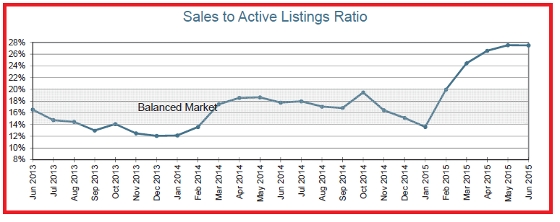
July 2, 2015, Victoria BC – The Victoria Real Estate Board today released its report on Multiple Listing Service® real estate activity in the Victoria area for June 2015. A total of 910 properties sold in the Victoria Real Estate Board region this June, a 33.8% increase compared to the 680 properties sold in the same month last year.


“The Victoria real estate market has had another big month – and we continue to see consistent year over year sales growth,” Victoria Real Estate Board President Guy Crozier says. “What’s going on? Positive market conditions such as the low interest rate along with the diverse mix of properties and price points available have likely helped support this increase in interest in local real estate. The activity in the market may also in part be due to pent up demand from the past six or seven years. The market cooled off around 2008, and with the US markets improving and our local economy showing strength, consumer confidence is improving. Those that may have been hesitant to move over the last few years are making a change now.”


The Multiple Listing Service® Home Price Index benchmark value for a single family home in the Victoria Core this time last year was $568,600. The benchmark value for the same home this month has increased by 4.61% to $594,800. There were 4,003 active listings for sale on the Multiple Listing Service® at the end of June, 14.7% fewer than the 4,695 active listings in June 2014.


“We saw 48 single family homes sell for over one million dollars this month, and we saw 74 single family homes sell for under $400,000,” adds President Crozier. “There’s also a lot of selection in our condo market, with new development in the Victoria Core and in the West Shore helping to meet demand, and maintain solid pricing. For detailed information on the Victoria and area housing market, connect with your local REALTOR®.”

Read


When you purchase a home, you’re hoping it will continually go up in value — just like a good investment.


However, there’s something else that you want to see go up in value as well: the neighbourhood. In fact, the neighbourhood plays a key role in what the home will be worth in years to come. If the neighbourhood goes down in terms of desirability, so will the market value of the home.


That’s why, when shopping for a new home, it’s important to get a feel for the value of the neighbourhood, and whether or not it’s on the upswing.


How do you do that? One way is to simply take a walk. Look at the properties. Are they well maintained? Is the landscaping groomed and attractive? Those are signs of “pride of ownership” — a clear indication that owners value their homes and the neighbourhood.


Another way is to do some research. Has crime gone up in the neighbourhood? Are there improvements planned, such as new parks? Is the neighbourhood attracting the kind of people you want as neighbours? How does the neighbourhood school rank?


Some of this information may be difficult to get on your own. A good REALTOR® can help you. Call today.

Read

Are you in the market for a home? If so, do you see yourself in a cozy character home with ornate fireplaces, or does the image of a brand new home with today's state-of-the-art technology appeal to you? Either way, you will find the rewards of buying your own home are many. The security, comfort and peace of mind you get from home ownership, regardless of your preference for old or new, are well worth the investment.


Look and compare

As you start searching for a home, it’s a good idea to enlist the services of a REALTOR®. REALTORS® have access to the MLS® system and can help narrow the search by providing you with a list of available properties in the price range and location that suits you.

Your selection, to a large extent, will be determined by your lifestyle and in most cases becomes a matter of compromise. For instance, you may find an older home that needs some renovation work, but this may not necessarily fit into your budget plans or your schedule. On the other hand, you may find a new home attractive but would have to spend extra money on landscaping and installing some of the amenities that may be a part of the package in an older home.


Advantages of an older home

With an older home, you can see exactly what you are getting -- structural faults are generally easier to see and can be or have been corrected. The character of the neighborhood is established and a variety of local services is usually available. In addition, the landscaping around the home has already been completed. There are generally fewer move-in costs because basic features like drapery tracks are already installed. Chattels -- such as special lighting fixtures -- are often included in the sale of an older home.


Advantages of a new home

A brand new home also has advantages. You have much more flexibility with a new home in customizing your decor and landscaping to suit your tastes. You get fresh, unblemished walls and you can usually choose the type of flooring, carpeting and cupboards that you want. You usually get much more storage space (such as closets) and larger rooms. In addition, today's minimum standards for plumbing, electrical, insulation and heating systems are higher than ever before.


Read


When you’re thinking of selling your home and buying another, you face the inevitable question: Should I list my property first or buy my new home first?


Let’s take a look at both options.


If you attempt to buy a property before listing your home, you run into a couple of challenges.


First, sellers may not take you seriously as a potential buyer. After all, you haven’t put your own home up for sale. As far as they’re concerned, you might merely be testing the market.


Second, your property might not sell as quickly as you thought it would. If there is an early closing date on the home you purchased, you might end up owning, and paying a mortgage on both properties, at least until your home sells.


If, on the other hand, you list your property before buying a new home, sellers will know you’re serious. That puts you in a competitive position in the event of multiple offers.


Also, if your home sells quickly, you’ll have the peace-of-mind of knowing exactly how much of a new home you can afford. You’ll be able to shop with confidence.


Of course, like the first option, there is a chance that the closing dates won’t match and you’ll end up owning two properties for a period of time. However, solutions such as bridge financing are available to help.


So, there is no perfect answer. A lot depends on the state of the local market.


Looking for a good REALTOR® who can help you decide which is the best move for you? Call today.


Read

June 1, 2015, Victoria BC – The Victoria Real Estate Board today released its report on real estate activity in the Victoria area for May 2015. A total of 905 properties sold in the Victoria Real Estate Board region this May, a 26.8% increase compared to the 714 properties sold in the same month last year.


“May was another great month for local real estate. It’s been a very active month for sales and listings, and we continue to see consumer confidence in our market as people continue to purchase properties,” Victoria Real Estate Board President Guy Crozier says. “Across our entire market, home values are up compared to this time last year. In high demand areas with less inventory available, we may see some pressure on pricing, but we also have areas in our market with great variety that offer more options in terms of property and price.”


The Multiple Listing Service® Home Price Index benchmark value for a single family home in the Victoria Core this time last year was $570,500. The benchmark value for the same home this month has increased by 3.98% to $593,200.


There were 4,043 active listings for sale on the Multiple Listing Service® at the end of May, 13.5% fewer than the 4,672 active listings in May 2014.


“We’ve not seen this many sales in May since 2007 when we saw 963 properties sell in the month,” adds President Crozier. “Despite the demand, prices remain competitive and there is great variety in what is available. For detailed information on the Victoria and area housing market, connect with your local REALTOR®.”


More information on the May 2015 report and the Multiple Listing Service® Home Price Index is available from the Victoria Real Estate Board, at vreb.org.

Read
MLS® property information is provided under copyright© by the Vancouver Island Real Estate Board and Victoria Real Estate Board. The information is from sources deemed reliable, but should not be relied upon without independent verification.