RSS

Many homeowners think there’s not much they can do about telephone, heating, water and other utility expenses. Sure, you may grumble about a high heating bill one month, but what can you do about it? Turns out, you can do plenty. There are several ways to reduce monthly utility costs that can save you tens or even hundreds of dollars. For
example:


• Shop around for a better phone plan. Then contact your phone company. They might match the rates.


• Turn down the thermostat on your water heater. You likely don’t need tap water to be that hot.


• Clean the screen on your outside air conditioning unit regularly. (Gently with the water hose.) Dirt and leaves can build up on it, reducing the unit’s efficiency.


• Leverage the sun. Open curtains in the winter to gain heat. Block direct sunlight in summer to keep the cool air inside.


• Scrutinize your bill. There may be extras you’re paying for that you don’t need.


• Play with the thermostat. Experiment with setting the temperature a couple of degrees lower. You might not notice any difference.


It’s worth paying attention to your utility costs. Just a few smart moves can save you some serious money.

Read

One of the most important decisions you make when selling your home is setting the listing price. That can be tricky. After all, if you price your property too low, you leave money on the table — perhaps thousands of dollars. On the other hand, if you price your home too high, many buyers won’t even bother to see it, believing it is too expensive.


Even with that reality, there are some sellers who contemplate setting a high listing price in the hopes of a windfall. They want some unsuspecting buyer to fall in love with the home and buy it — even though it’s overpriced.


That rarely, if ever, happens.


Instead, the listing often languishes on the market because its listing price is conspicuously much higher than its market value. Think about it. If two similar homes, side-by-side, are for sale, and one is priced $40,000 higher than the other, wouldn’t you wonder what was going on? That’s exactly what the market thinks. “Why is that home priced so high?”


Of course, many buyers, who might otherwise be interested in the property, won’t even consider seeing it, simply because it’s outside their price range. It gets worse. When an overpriced home sits on the market with no offers for several weeks, the price will often need to be adjusted down. That helps the situation a little. However, you’ve lost the excitement created by a “new listing.” Yours is now an old listing struggling to get attention.


There’s a better way…


Setting your list price at or near the market value is much more likely to generate interest from qualified buyers and maximize how much you make on your home. That market value may even be higher than you think!


Interested in finding out how much? Call today.

Read


December 1, 2015, Victoria BC – Victoria Real Estate Board President Guy Crozier confirms that November was another busy month for the popular Victoria real estate market. “Holding true to the theme we’ve seen throughout the year, the Victoria market had another great month of sales, with numbers exceeding those from the same time last year.”


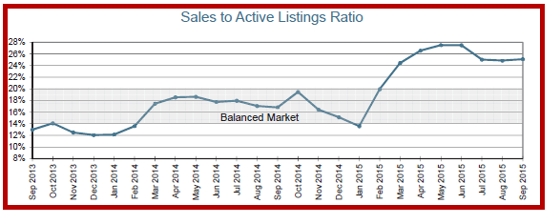
A total of 573 properties sold in the Victoria Real Estate Board region this November, an increase of 23.2% compared to the 465 properties sold in the same month last year. There were 2,952 active listings for sale on the Victoria Real Estate Board Multiple Listing Service® at the end of November, 18.7% fewer than the 3,631 active listings at the end of November 2014.


Crozier notes that prospective sellers may want to take advantage of the current market conditions. “One thing I can say about the market right now is that due to lower inventory levels, this is the best time in the past ten years to list a house. Demand from buyers in most areas is up, but inventory continues to decrease on a year over year basis. The good news for buyers is that pricing remains competitive and there are new listings coming onto the market every day.”


What does Crozier recommend buyers and sellers keep in mind as the year comes to a close? “There are real estate microclimates in Victoria. Different areas have different levels of demand and ability to meet that demand. Though properties are selling everywhere, what to expect in terms of value and time to sell may differ depending on your area and the type of property. Now more than ever it’s important to work with a REALTOR® to understand the market and track the activity.”


The Multiple Listing Service® Home Price Index benchmark value for a single family home in the Victoria Core last year in November was $558,600. The benchmark value for the same home in November 2015 has increased by 9% to $608,600.


More information on the November 2015 report and the Multiple Listing Service® Home Price Index is available from the Victoria Real Estate Board, at vreb.org.

Read

You may love animals, but with the exception of your family pets, you don’t want them in your home. Here are some tips for keeping the wildlife around your property where it belongs: outside.


• Don’t place bird feeders too close to your windows. Doing so may cause birds to associate a window with food and therefore try to peck their way inside.


• Make sure window screens are secure. If you can push a screen loose with your hand, so can a bird or other animal.


• Check screens on dryer vents and chimneys. If they are damaged, fix or replace them.


• To determine how animals are entering your home, stuff wadded paper in the suspected entry point. If the paper is disturbed the next day, you’ll know where they got in.


• Never leave food outside, unattended. After a barbeque, for example, take all remaining food inside. If you do find an animal in your home, never try to pick it up. It may bite or have rabies. Instead, call a professional.

Read


November 2, 2015, Victoria BC – The Victoria Real Estate Board today released its report on real estate activity for October 2015. A total of 734 properties sold in the Victoria Real Estate Board region this October, an increase of 21.9% compared to the 602 properties sold in the same month last year.


There were 3,170 active listings for sale on the Victoria Real Estate Board Multiple Listing Service® at the end of October, 19.3% fewer than the 3,927 active listings in October 2014.


“This is the twenty-ninth month in a row that we’ve seen monthly sales increase over the year before,” Victoria Real Estate Board President Guy Crozier says. “This month we also saw sales numbers surpass the total for last year – in 2014 there were 6,698 sales and as of October 31, 2015 there are 7,257 sales on record with two months to go in 2015! We’re looking down the home stretch of 2015 and there is no sign of a market slow down.”


The Multiple Listing Service® Home Price Index benchmark value for a single family home in the Victoria Core last year in October was $555,900. The benchmark value for the same home in October 2015 has increased by 9.4% to $608,200.


What’s President Crozier’s advice to buyers shopping for their perfect home? “It’s critical to work closely with your REALTOR® to stay on top of the market. With home sales almost at the pace of new listings, the market is moving quickly and some homes in high demand areas like the Victoria Core are selling in days. Working with your Realtor on a plan of what you require over the course of the transaction can remove stress and risk from the process.”


More information on the October 2015 report and the Multiple Listing Service® Home Price Index is available from the Victoria Real Estate Board, at vreb.org.

Read

You’ve no doubt noticed the occasional news report about a product being recalled for safety reasons. For example, a car model with a brake problem, or a children’s toy that, under some circumstances, may cause injury. You may not know that these news reports are merely the tip of the iceberg. For each product recall you hear about in the media, there are dozens that get little, if any, publicity.


That means there may be products in your home that have been recalled — and you don’t even know about it. It’s a scary thought. How do you find out about recalled products that may affect you? Here are two tips.


1. Always complete the registration that comes with many products. This is typically done by mailing in a registration card or filling out an online form. When you register, you’ll be alerted by the manufacturer if the product is recalled for any reason.


2. Both Canada and the United States have agencies that list recalled products on their websites. In Canada it’s the Healthy Canadians website at www.healthycanadians.gc.ca. In the United States it’s the Consumer Product Safety Commission at www.CPSP.gov. It’s a good habit to check these sites every season.


If you discover that a product in your home has been recalled, contact the manufacturer immediately. Never assume that the reason for the recall won’t apply to you.

Read

When you put your home up for sale, you want it to look its best to potential buyers. That’s why you clean, tidy and de-clutter every room. Some sellers, however, miss the backyard. You need to pay just as much attention to that space as you do to the interior of your home. The backyard is as important a living space as the family room. To some buyers, even more.


Buyers want to see an attractive backyard space, with the grass cut and the hedges trimmed. The more neat and tidy you can make it, the better. Be sure to sweep walkways and wipe down patio furniture.


Also, watch out for the following things that buyers do not want to see:


• Bags of garbage and other waste.
• Doggie do-do. (Be sure to stoop and scoop!)
• Rakes and other tools piled in the corner.
• Cluttered and disorganized storage sheds, pool huts and other
backyard structures.
• Weeds in the flower beds.
• Items stored underneath the deck.
• Hoses not stowed neatly.
• Electrical outlets and water faucets that don’t work.


These are not difficult issues to fix. Doing so will positively impact the impression the buyer gets of your backyard.


Do you have a backyard that shows particularly well in the summer? Here’s a tip: Take pictures. Those photos will help buyers be able to appreciate how it looks should you list your home in the winter.

Read

October 1, 2015, Victoria BC – The Victoria Real Estate Board today released its report on real
estate activity for September 2015. A total of 704 properties sold in the Victoria Real Estate
Board region this September, an increase of 24.6% compared to the 565 properties sold in the
same month last year.


There were 3,478 active listings for sale on the Victoria Real Estate Board Multiple Listing
Service® at the end of September, 18.2% fewer than the 4,253 active listings in September
2014.


“We certainly have less inventory in the market than we saw at this time last year,” Victoria Real
Estate Board President Guy Crozier says. “Though higher sales have contributed to a reduction
in the available inventory, with almost 1,000 new listings entering the market in September,
there is still a continual supply of new inventory for those folks who hope to make a move.”


The Multiple Listing Service® Home Price Index benchmark value for a single family home in
the Victoria Core last year in September was $558,600. The benchmark value for the same
home in September 2015 has increased by 8.7% to $607,100.


“While September often signals the re-start of the market after the traditional summer slowdown
in sales activity, our market remained strong right through the summer and September,” notes
President Crozier. “This September is different than past years. Our busiest month last year was
in May, and 714 properties sold. That’s only 10 more transactions than we saw in September
this year. The question now is - will we see the normal winter lull in sales and listings or will the
market continue at this pace?”


More information on the September 2015 report and the Multiple Listing Service® Home Price
Index is available from the Victoria Real Estate Board, at vreb.org.

Read


If you see a haze of condensation on your window, should you be concerned? Maybe. Maybe not. It depends on a number of factors.


First of all, an occasional build-up of condensation is normal and often the result of fluctuating humidity in the home. Usually, it’s nothing to worry about. If you’re using a humidifier, try adjusting the levels. If the humidity is being generated naturally, try placing a dehumidifier nearby. Also, remove any plants and firewood from the area, as they can release a surprising volume of moisture into the air.


Do you see moisture in between the panes of glass that make up the window? If so, that means the seal has failed and moisture has crept in. Double and triple pane windows often contain a gas (argon, for example) that boosts the insulating qualities of the window. When the seal fails, the gas disappears, making the glass colder and often allowing condensation to creep in. Eventually, you’ll want to get it replaced.


If you see moisture build-up anywhere on the frame of the window, particularly at the joints, that could be a sign of water leaking through. That’s an issue you should get checked out immediately by a window contractor.

Read

If you take care to price your home correctly — that is, at a price that is in line with what similar properties in the area have sold for recently — then you have a good chance of selling it at or near your asking price.


That doesn’t mean you won’t get a low-ball offer. You might. So what do you do when that happens?


First, understand that the buyer may not necessarily be trying to steal away your home at a bargain-basement price. He might simply be mistaken about its true market value. Of course, he might also be coming in at a low price in the hopes he’ll get lucky.


You will never actually know the buyer’s motives. So it would be a mistake to get angry or dismiss the offer out-of-hand. That low-ball offer might end up being the beginning of a negotiation that results in you selling your home at a good price.


Your first step is to work with your REALTOR® to determine:


  • How serious the buyer is.
  • How qualified the buyer is. (For example, does he have a pre-approved mortgage?)
  • How amenable the buyer is to a counter-offer that reflects the true market value of your home.
  • What that counter-offer should be.


This isn’t an easy process. It takes knowledge and experience to get it right. That’s why working with a good REALTOR® is essential.


Looking for a REALTOR® who is an expert at this stuff? Call today.

Read


September 1, 2015, Victoria BC – The Victoria Real Estate Board today released its report on real estate activity for August 2015. A total of 741 properties sold in the Victoria Real Estate Board region this August, an increase of 21.7% compared to the 609 properties sold in the same month last year.


“Consumer confidence in our area continues to be one of the main drivers of the spring and summer market surge,” Victoria Real Estate Board President Guy Crozier says. “In terms of single family home sales, this month we saw the highest number sold in the month of August since 2007. A total of 379 single family homes sold in August 2015, compared to 399 in August 2007.”


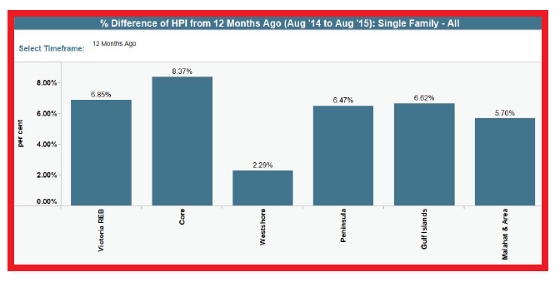
There were 3,688 active listings for sale on the Victoria Real Estate Board Multiple Listing Service® at the end of August, 14.6% fewer than the 4,316 active listings in August 2014. The Multiple Listing Service® Home Price Index benchmark value for a single family home in the Victoria Core last year in August was $556,600. The benchmark value for the same home in August 2015 has increased by 8.37% to $603,200.


“The Canadian Mortgage and Housing Corporation announced new rules for buyers who have less than a 20 per cent deposit,” notes President Crozier. “Starting at the end of September, buyers who apply for mortgage loan insurance from CMHC will be able to include 100 per cent of the projected income from secondary suites. A change like this may buoy the market through the fall and winter, and we may see increased pressure on areas that permit suites. We’ll watch over the upcoming months and track any trickledown activity.”


More information on the August 2015 report and the Multiple Listing Service® Home Price Index is available from the Victoria Real Estate Board, at vreb.org.

Read


Finding the perfect home doesn't happen in one day. It takes careful planning and lots of work. Fortunately, there are a number of things you can do to simplify the process.  

1. Things to Consider Before Starting Your Search

What Features Do You Need?

Do you need an extra bathroom, a garage, a fenced backyard, or lower utility bills? Do you want a fireplace, a short drive to work, or maybe minimal yard work? Once your list is complete, decide what’s most important to you.

What’s the Ideal Location?

Where you live obviously affects your life

style; it’s also one of the most significant influences on the value of your home. Your choice of location may be somewhat limited by the price you can afford. Even so, make sure to consider such things as distance to work, schools, shopping and entertainment.

What Kind of Home?

What type of property do you want? A single-family detached home is attractive to many people because it typically provides more living space and land. On the other hand, a condominium may be a more appropriate choice for you, with an emphasis on maintenance-free living. Determine what type of home best suits your desired lifestyle and budget.

What’s Your Budget?

How much do you want to spend? Just as importantly, how much do you have to spend? Note there are numerous additional expenses (detailed below) that you’ll pay to complete the purchase of a home.

2. Choosing a REALTOR®

A REALTOR® can help you answer all of these questions and help you navigate through what can be a complicated business transaction. Start by finding REALTORS® in your city by using CREA’s handy search tool. Then, talk to some of them and compare their services. It’s important that you’re comfortable and confident with the agent you choose.

3. Searching For a Home

A REALTOR® will use various tools to try and find properties that meet your specifications. The most important is a local Board’s MLS® (Multiple Listing Service®) System. Your REALTOR® can quickly search through numerous properties available for sale in specific areas to find suitable listings; that is, houses that best match your needs, choice of neighbourhoods and price range. You can also view listings in Board MLS® Systems that are advertised on the national REALTOR.ca web site.

4. Seeing Houses

When you select a property and decide to visit a house, there are many things to consider. Does it have all the features you want? Is the neighbourhood what you expected? Try to picture your favorite furnishings in a room. Remember all of the technical considerations, including:

  • What type of wiring does the house have?
  • What about power outlets? Different appliances use different types.
  • What type of heating system does it use? Heating costs can vary drastically by type.
  • Have the roof and foundation been well maintained?
  • What condition are the windows in?
  • What about the plumbing?

There are numerous other things to consider as well. If you don't have time or don't feel comfortable doing it, home inspection services are available for a reasonable fee. Having a qualified home inspector look at the house is always a good idea. The older the home, the greater the need for professional inspection.

5. Making an Offer

Once you find a house you want to make your home, your REALTOR® can help you develop an offer. In the offer, you should specify how much you're willing to pay. State when the offer expires and suggest a closing date for the transaction. You can also propose some condi

tions on the offer. Some common types of conditions are:

  • Getting a suitable mortgage (include the amount, interest rates and any other figures you feel important);
  • Selling your current home (the seller may continue to look for a buyer, but will give you the right of first refusal);
  • The seller providing a current survey, or a "real property report," showing that there are no encroachments on the property;
  • The seller having title to the property (your lawyer will check this out when she conducts a title search to see if there are any liens on the property, easements, rights of way or height restrictions);
  • If there’s a septic system, the seller having a health inspection certificate, stating that the system meets local standards;
  • An inspection by a qualified engineer, should you have any doubts about the home's safety and construction; and
  • Any inclusions of appliances and other items - basically, what stays and what goes.

You will need to present a deposit along with your offer. An appropriate deposit will show your good faith to the seller. Note that the seller's agent, if they are represented by one, is bound by law to bring all offers to the seller's attention.

6. If Your Offer is Accepted

After your offer is accepted and all conditions met, the offer becomes binding on both sides. If you later refuse to honour the agreement, you may lose your deposit or might be sued for damages. Before signing, make sure you understand and agree with all terms of the offer.

Before the property can formally change hands, there are still a few things to do. Be prepared to furnish proof to your lender that you’ve insured your new house. On or before closing day, both side’s lawyers will arrange to transfer title of the property from the seller to you. The mortgage money will be transferred to your lawyer's trust account, and then to the seller, and your lawyer will bill you all additional expenses such as land transfer taxes or outstanding legal fees.

At this time, be sure to check with your lawyer that everything is as stated in the offer-to-purchase. 

Once you're satisfied and the keys to the front door are in your hands, there's nothing else to say, except welcome home!

Extra Expenses

No matter what type of home or property you're buying, plan on some extra expenses. 

  • A land transfer tax (a sales tax on property) in certain provinces
  • A mortgage broker's fee
  • An appraisal fee
  • Surveying costs (if the seller couldn't come up with a current survey)
  • A high-ratio mortgage insurance premium
  • An interest adjustment. (Mortgages are normally calculated from the first of each month. If your closing date is the same as the beginning of your mortgage, there will be no adjustment. However, if your closing date is July and you move in on June 15, those last 15 days are the interest adjustment period. Your lender will expect you to cover the cost of the interest during that time.)
  • Reimbursement to seller for the unused portion of any prepaid property taxes or utility bills
  • Legal fees, and, if applicable, REALTOR® fees

(The comments contained on this page are for informational purposes only and do not constitute legal advice.)

Read
MLS® property information is provided under copyright© by the Vancouver Island Real Estate Board and Victoria Real Estate Board. The information is from sources deemed reliable, but should not be relied upon without independent verification.