RSS

It’s early in the evening and there’s a knock on the door. You answer and are greeted by an official-looking man who claims he needs to see your utility bill to confirm you’re getting your energy rebate.


Do you let him in?


While he may be legitimate, he may also be using deception to sell you something you don’t want. Here are some suggestions for finding out:


• Ask for a business card. Then, check if it has an address, phone number and website. If the salesperson refuses or just shows you his ID card (which anyone can fake), that’s a red flag.


• Ask for the name of his employer. Sometimes salespeople will say they “represent the phone company”. That doesn’t mean they actually work for it.


• Ask if you can call his company to confirm details before buying. If he refuses, or says the office is closed, shut the door.


• Ask if you can consider the offer and call the office the next day to place your order.


• If you’re really suspicious, ask him to come back later. Then, call the non-emergency police number. Police are aware of common scams in the area.


Most importantly, use your common sense. Door-to-door salespeople can be pretty persuasive, but if something doesn’t seem right to you, trust your gut. Say, “No thanks.”


Of course, if everything checks out with the salesperson, and the offer is a good one, consider taking advantage of it.

Read

No matter how much you love your current property, you may be dreaming of the day you can buy up into a better home in a better neighbourhood.


Is that day today, or, is it a few years down the road?


Here’s a quick way to make that assessment.


First, make a list of all the practical reasons why it might be time to move up. Those reasons might include features such as: more bedrooms, proximity to work and school, a larger backyard with trees, nearby parks and walking paths and better access to things you enjoy.


Next, make a list of the emotional reasons for making such a move. Those reasons might include memorable get-togethers with friends on a more spacious deck, an easier and less stressful commute to work, more family time with the kids and enjoyable Saturday golfing at a nearby course.


Finally, take a financial snapshot to determine if you can afford to move up. You’ll need to get a good idea of what your current property will sell for in today’s market, average price of homes in your desired neighbourhood, and how much mortgage you’ll need.


Once you have all that down on paper, you’ll have a clear picture of your readiness. If the practical and emotional reasons for buying up are compelling, and you can afford to make the move, then you have your answer.


The time is now!


By the way, if you need help in making this determination – especially figuring out what your home will likely sell for, call today.


Read


November 1 2016, Victoria, BC


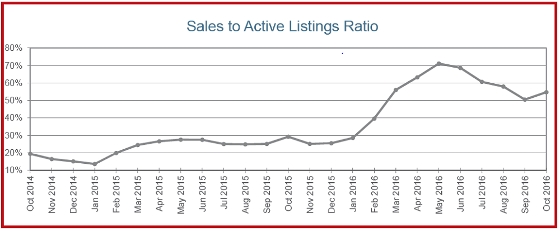
A total of 735 properties sold in the Victoria Real Estate Board region this October, a single property more than the 734 properties sold in October last year.


Inventory levels remain lower than last year, with 1,938 active listings for sale on the Victoria Real Estate Board Multiple Listing Service® at the end of October 2016, 38.9 per cent fewer than the 3,170 active listings at the end of October 2015.


“We continue to see low inventory hindering sales in the local market,” notes Mike Nugent, 2016 President of the Board. “Though our numbers are down from the record setting pace set this summer, the market is still moving quickly and is still very competitive for certain properties. High demand areas like Saanich and Oak Bay continue to see multiple offers and areas in the West Shore are also seeing sales over listed prices. In other areas, prices remain firm because of high demand and extremely limited inventory.”


The Multiple Listing Service® Home Price Index benchmark value for a single family home in the Victoria Core in October 2015 was $608,200. The benchmark value for the same home in October 2016 has increased by 24.1 per cent to $755,000.


“The federal government’s change to mortgage lending rules has also impacted buyers,” adds President Nugent. “Buyers that require mortgage insurance are able to qualify for significantly smaller mortgages than before the rule change and this is further limiting their options in a very restricted market. Some buyers have postponed their search in order to save up more of a down payment so they can work within these new limitations.”

Read

When you’re about to sell your home, it may be disheartening to see so many other properties for sale in your neighbourhood. You may be thinking, “That’s a lot of competition! Will our property get noticed?”


Fortunately, there are many proven strategies for standing out in a sea of For Sale signs. First of all, keep in mind that many home purchasers come from the REALTOR’S personal network of buyers who want to move into your area. So, choosing the right REALTOR® is crucial.


Second, remember that when there are other properties for sale on your street, curb appeal becomes even more important. There are many simple things you can do to make your property look great to those driving around looking at homes. Make sure your property looks as picture perfect as possible.


In a competitive market, it’s also more important than ever to highlight features of your home that are unique and enticing. If, for example, you have a large backyard deck and brand new hardwood flooring, make sure these are mentioned prominently on the feature sheet.


Finally, be as flexible as you can be when scheduling viewings and open houses. Don’t forget that other listed properties in your neighbourhood draw in buyers, who may notice your home. It’s not uncommon for a buyer to view a property and then scout the neighbourhood. So, you want buyers to be able to see your home on short notice and at a convenient time for them. If there are several other nearby properties for sale, it means things are hot from a real estate point of view. You want to roll out the red carpet to buyers.


Looking for help selling your home quickly and for the best price? Call today!

Read

You’re standing by your window admiring the view. Then you notice it. Moisture has built-up around the edges of the glass. Should you worry?


It all depends on the reason for the build up.


Assuming you have traditional double-pane glass in your windows, there are a few things to look for if you notice moisture.


Often, moisture at the bottom of the windows is simply caused by too much humidity in your indoor air. If that’s the case, simply adjust your humidifier.


If the moisture is on the exterior of the window, typically there’s also no problem with the window itself. It may have rained recently or the outside humidity may have spiked causing the accumulation. Generally, there’s no reason for concern.


However, if the moisture is in between the two panes of glass, the seal has broken and surrounding air – along with its water content – has made its way in. This disrupts the thermal barrier of the window, reducing its energy efficiency. In fact, the glass might feel noticeably colder than your other windows on chilly days. In that case, you’ll need to replace the pane.


Similarly, if the moisture is coming in through only one spot — the bottom right corner, for example — then you might have a leak. If you have a wood frame or sill, you may also notice a growing water stain. It’s important to get leaks fixed quickly. There may be water damage occurring within the frame that you cannot see.

Read


October 3 2016, Victoria, BC


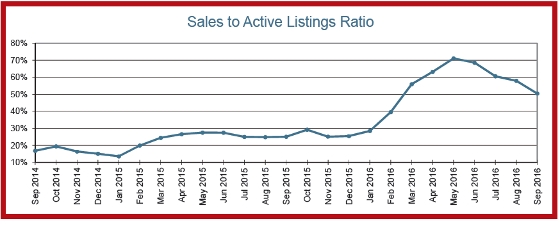
A total of 781 properties sold in the Victoria Real Estate Board region this September, an increase of 10.9 percent compared to the 704 properties sold in September last year.


Inventory levels remain lower than last year, with 2,061 active listings for sale on the Victoria Real Estate Board Multiple Listing Service® at the end of September 2016, 40.7 per cent fewer than the 3,478 active listings at the end of September 2015.


“This is the lowest level of inventory on the market in September that we have on record [since 1996],” notes Mike Nugent, 2016 President of the Board. “This continuing lack of inventory holds up sales. The market is still strong, but not moving at the pace we saw earlier in the year. This slowdown is typical with what we expect in the fall to winter season and may be more pronounced as a result of buyer fatigue, due to the lack of available inventory.”


The Multiple Listing Service® Home Price Index benchmark value for a single family home in the Victoria Core in September 2015 was $607,100. The benchmark value for the same home in September 2016 has increased by 22.8 per cent to $745,700.


“We have already exceeded the number of sales that we saw in 2015, with a full quarter remaining in the year,” adds President Nugent. “And there is still strong demand, thanks to underlying fundamentals in our province – the GDP is up, employment numbers are up, retail and population growth is up. All of these contribute to current market conditions. We also see no indication that the new foreign buyer Property Transfer Tax in Metro Vancouver has pushed foreign buyers into our market in a substantial way, though we continue to track that as a possibility.”

Read

 
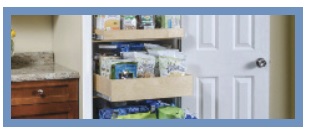
A pantry is the ideal nook for storing extra food and other items ordinarily crammed into the kitchen. It’s also a nice design feature, as it harkens back to the days of country kitchens with spacious pantries.
 
You might be thinking, “That’s nice, but our home doesn’t have a pantry.”
 
That’s okay. These days, there are many ways to create a pantry in your home – even if it doesn’t have one! Here are just a few suggestions:
 
• Add shelves to the laundry room. If you have the space, this is the
ideal place to create a mini-pantry.
 
• Purchase a portable pantry. There are many available on the market. Some are even disguised as cabinets you’d expect to see in living and dining rooms.
 
• Purchase a movable pantry. These units are on wheels and can slide in and out of the kitchen with ease. Some are short enough to slide conveniently under a kitchen table.
 
• Make use of an unused closet. These are rare in most homes, but if you have a closet that isn’t being used, it can easily be converted into a pantry.
 
As you can see, there are plenty of options available. You don’t necessarily need to build an extra room!
 
 
Read

When considering which of two or more competing offers to accept for your home, there is no doubt price plays a huge role. After all, if Offer #1 is $10,000 higher than Offer #2, that’s an enticing difference that puts thousands of extra dollars in your pocket.

 
However, price isn’t the only thing you should think about when comparing multiple offers. There are other factors you need to consider as well.
 
For example, what conditions are in the offer? If Offer #1 is conditional upon the buyer selling his current property for a specific amount, then what if that doesn’t happen? You could end up with an offer that dies and be forced to list your home all over again.
 
In that circumstance, accepting the lower offer may be your best move.
 
There’s also financing to consider. Most buyers will attach a certificate from their mortgage lender to show that they can afford the home and will likely secure financing with little difficulty. If you get an offer where the ability of the buyer to get financing is in doubt, that’s a red flag.
 
The closing date is another important factor. Offer #1 might propose a closing date that’s perfect for you, while Offer #2 is four weeks later. If you’ve already purchased another home, you might require a month of bridge financing if you accept Offer #2. There’s nothing wrong with that per se, but the costs and additional hassle are factors you should consider.
 
As you can see, assessing competing offers isn’t as easy as it looks. Fortunately, as your REALTOR®, I will guide you toward making the right decision.
Read


September 1 2016, Victoria, BC


A total of 883 properties sold in the Victoria Real Estate Board region this August, an increase of 19.2 percent compared to the 741 properties sold in August last year.


“August is a record breaker in more than one way. For the sixth consecutive month, we have a sales record with more sales than any other month of August on record,” says Mike Nugent, 2016 President of the Board.


“We also have the lowest number of listings available for sale in an August than we’ve seen in the last twenty years. That lack of inventory will continue to put pressure on pricing. Sales would be even higher were there more inventory available for buyers to purchase. Regardless of the low inventory, it’s safe to say that by mid-September we will have surpassed the number of sales for all of 2015, with four months remaining in the year.”


Inventory levels remain lower than last year, with 2,094 active listings for sale on the Victoria Real Estate Board Multiple Listing Service® at the end of August 2016, 43.2 per cent fewer than the 3,688 active listings at the end of August 2015.


“As we saw last month, the expected seasonal slowdown continues as we move towards the autumn,” adds Nugent. “August tends to be the slower summer month, though the year-over-year sales numbers are very strong. This shows continued consumer confidence in the Victoria real estate market. It is early to determine a trend, but we don’t see any early indications that the foreign investment Property Transfer Tax implemented in Metro Vancouver has impacted sales to any extent in Victoria at this time.”


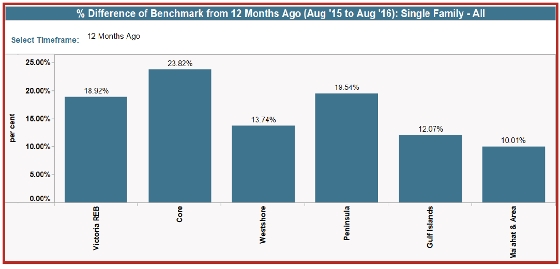
The Multiple Listing Service® Home Price Index benchmark value for a single family home in the Victoria Core in August, 2015 was $603,200. The benchmark value for the same home in August 2016 has increased by 23.8 per cent to $746,900

Read

You can’t call yourself a dentist unless you have specific hard-earned credentials. Just about anyone, however, can hang a shingle and call himself a home improvement contractor. That’s why choosing a reputable one is so difficult. Here are some tips:


• Find out if he or she is truly in business full-time. A part-time or occasional contractor may not have the experience necessary to do a great job.
• Ask about licenses and other credentials. Some contractors have accreditations from professional and trade associations.
• Review his or her project portfolio. A reputable contractor will have photos and other evidence of work completed for similar clients.
• Check online for reviews. If there are more than five poor reviews within the past three years — that’s a red flag.

• Ask for references. Then, call at least one.


Finally, the best contractors are those that get recommended by people you trust.


Looking for a contractor recommendation? Call me today and I would be happy to provide you with a list of tried and true professionals.

Read

Figuring out how much time you should spend viewing properties for sale isa little like asking, “How long should I spend trying on shoes?”

The answer seems obvious: As long as it takes to make a decision!


Buying a home is significantly more complex than purchasing shoes – and the stakes are higher too! You need to make sure you have all the information necessary to confidently make the best decision.


 There are basically three stages to viewing a property:


1. Macro
2. Micro
3. Professional


When you view a home on a macro basis, you’re looking at it from an overall perspective. For example, you may do a general walk-through to get a first impression and determine if the property has the basic features you need, such as the number of bedrooms and the size of the backyard.


Macro viewing is often the fastest stage in the viewing process and can sometimes take just a few minutes. If you like what you see, then it’s onto the micro stage. At this stage you take a closer look at the details of the property. You might, for example, spend extra time in the master bedroom imagining how your furniture would look and fit.


The micro stage takes longer simply because the home is now on your shortlist. You’re interested and are considering making an offer.


Finally, the professional stage involves getting a qualified home inspector to go over the property with a fine tooth comb. That typically occurs after you’ve made an offer.


As your REALTOR®, I will guide you through a viewing so you’ll know what to look for and can make a smart, informed decision. Call today.

Read


August 2 2016, Victoria, BC


A total of 972 properties sold in the Victoria Real Estate Board region this July, an increase of 22 per cent compared to the 796 properties sold in July last year. 


“Though we saw the seasonal slowdown that we expect this time of year, we had another record breaking month,” says Mike Nugent, 2016 President of the Board. “The last time we saw a July this busy was in 2009 when 933 properties sold.” Inventory levels remain lower than last year, with 2,161 active listings for sale on the Victoria Real Estate Board Multiple Listing Service® at the end of July 2016, 45 per cent fewer than the 3,942 active listings at the end of July 2015.


“Late last week the provincial government approved new legislation that may affect the real estate market in our area, though at this time we can only guess how a foreign investor’s tax in the Metro Vancouver region will impact sales here in Victoria,” adds Nugent. “Recent data released by the government shows that nearly ten per cent of property transfers in Metro Vancouver involved foreign nationals. This is part of the rationale for applying a fifteen per cent tax on transactions only in Metro Vancouver at this time. Does this mean international demand will spill over into Victoria and other areas of BC? We won’t know until we see the data.The Capital Regional District saw two per cent out of country buyers in the year of 2015. Although this is a small percentage of our buyers, anecdotally foreign buyers do tend to favour the same core neighbourhoods and therefore can have an impact on those areas.”


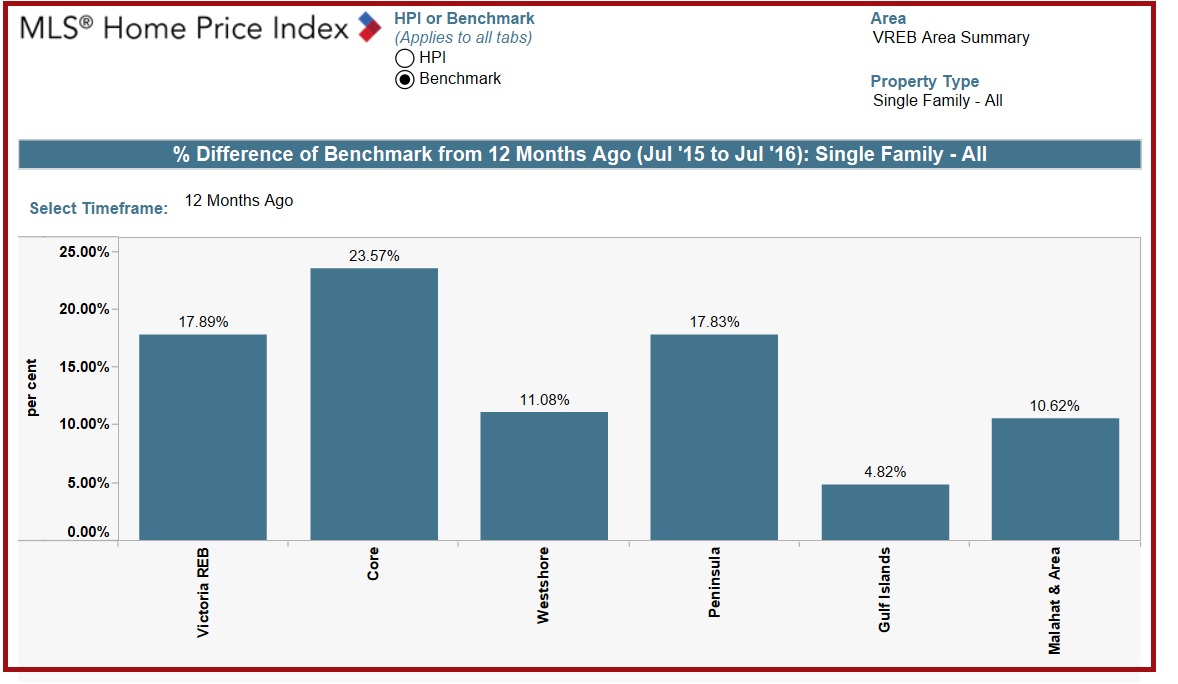
The Multiple Listing Service® Home Price Index benchmark value for a single family home in the Victoria Core in July, 2015 was $599,800. The benchmark value for the same home in July 2016 has increased by 23.6 per cent to $741,100.

Read
MLS® property information is provided under copyright© by the Vancouver Island Real Estate Board and Victoria Real Estate Board. The information is from sources deemed reliable, but should not be relied upon without independent verification.